
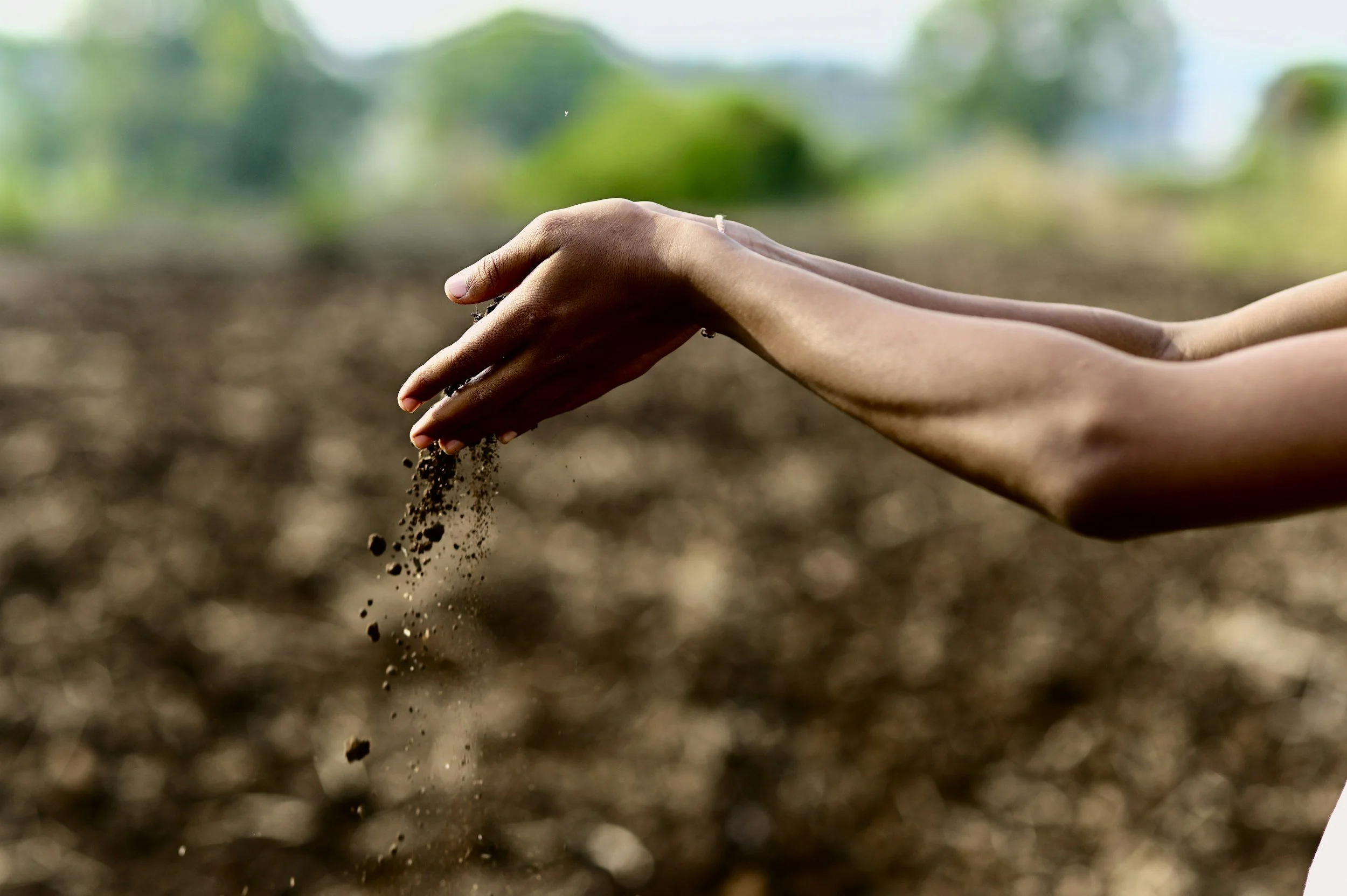
I have always found the Parable of the Sower challenging, and for two reasons. The second has to do with my calling as a preacher, and I'll come to that in Part 2. The first is personal: this parable calls me to continual evaluation as I turn the soil of my own heart.
The order matters. A man who sows the Word every week had better be receiving it himself.
So this is where I'm starting, and I'm asking you to start here with me. Jesus told this parable to a crowd on the shore (Matthew 13:1–9), and when He explained it, He explained it in terms of the people who hear (vv. 18–23). Nobody in that crowd was exempt. Neither is the pastor. Neither is the pew.
A sower goes out to sow. The seed is good, all of it. What differs is the ground.
The Path
Some seed falls along the path, where the ground is packed hard by traffic, and the birds come and take it.
When I think about the path, I picture a cart moving down the road too fast with its seed bag split open. Seed is falling the whole way, and the cart never slows down. Whatever lands is left exposed to the birds and the foot traffic.
That is me on certain weeks. I am tempted to move too fast. I can find something glorious in a text on Tuesday, preach it on Sunday, and be on to the next one Monday morning without ever letting it sink into me. The Word was scattered. It never got below the surface.
You know this too. Something lands on Sunday morning, and by Sunday night it has been trampled by the drive home, the game, the group text, the dread of Monday. Jesus says plainly who the birds are: the evil one comes and snatches away what was sown (v. 19). He doesn't have to argue us out of the truth. He only needs us to keep moving.
Slow down. Let it land.
Rocky Ground
Some seed falls on rocky ground. It springs up fast because there is not much soil, and when the sun comes up, it is scorched.
Rocky ground is not a heart that rejects the Word. It receives it with joy, right up until the rock. So the question I have to ask myself is this: what are the immovable rocks that keep the truth of God from breaking ground and taking root?
They are rarely theoretical. They look like ordinary life. The fear that tightens every time you think about money, or your kids, or what the doctor might say. The grudge you have decided you are entitled to keep. The habit you stopped fighting a while ago and started managing instead. The thing nobody knows about. The quiet disappointment with God over a prayer that didn't get the answer you wanted, which you have never quite said out loud. A calendar so full that prayer is always the first thing cut. An ambition you have baptized and called a calling. The one room of your life you have simply never surrendered.
The Word goes in, hits one of those, and goes no deeper. I have seen every one of them in people I've pastored. If I'm honest, I have seen more of them in myself than I would like.
Here is the good news: God busts up rocks. His Word is like a hammer that breaks the rock in pieces (Jeremiah 23:29). And sometimes He does it through His servants. In Exodus 17, the rock split and gave water when Moses struck it with the staff God had put in his hand. God still breaks rock through leadership and a staff: a faithful shepherd, a friend who won't let you off the hook, a church that loves you enough to tell you the truth. Don't resent the staff. It may be the very thing God is using to break what you can't.
Thorns
Some seed falls among thorns, and the thorns grow up with it and choke it. Jesus names them: the cares of the world and the deceitfulness of riches (v. 22).
What I have learned about thorns is that they usually disguise themselves before they shoot their thorns out. Nobody plants a thornbush on purpose. What you plant is a good thing. A promotion. A new opportunity. A child's travel team. A ministry you said yes to. A house that needs a little more work. Each one is good, and each one deserves some attention. Somewhere along the way, the good thing grows up around the best thing and starts to choke it.
Be wary of confusing a good thing for the best thing.
A choked plant doesn't die right away. It keeps growing. It keeps reaching toward the sun. It just never comes to fruit. That is what thorns do to a Christian: you can be busy, involved, sincere, and anemic all at once.
And thorns can't simply be cut off. Trim them back and they are there again by spring. They have to be pulled up by the root.
Good Ground
Finally, some seed falls on good soil and produces grain, some a hundredfold, some sixty, some thirty.
Good soil is not ground that has never been touched. It is ground that has been worked. Romans 8 is the tilling: the Master, through circumstances, working all things together for good, conforming us to the image of His Son (Romans 8:28–29). The waiting, the loss you would never have chosen, the conviction that wouldn't let you sleep: in the hands of the Sower, none of it is wasted. He is turning the soil.
If we want to be fruitful, our soil must be good. The way soil becomes good is by allowing the Sower, who is always wise, to come and turn it.
Sometimes it's painful. But it's always fruitful.
Prepare Your Heart
If you preach: before you ask how the Word will land in your people, ask how it is landing in you. Sit with last Sunday's text before you rush to next Sunday's. Name your rocks. Pull your thorns. Your people will not get deeper soil from you than you are letting God work in you.
If you listen: the seed is good. Every Sunday, every time you open the Scriptures, Christ Himself is being sown, for He is the Seed. The question is the ground. Slow down long enough for the Word to land. Ask God which rock He is trying to break. Look honestly at the good things that may be choking the best one. And trust the Sower with the turning, even when it hurts.
Prepare your heart. Work the ground.
Continue to Part 2: Learning to Sow, on what this same parable is teaching me about the work of sowing, and why every one of us has been handed a seed bag.