This week, I had the privilege of representing First Baptist Church of Starkville as a messenger to the 2026 Southern Baptist Convention in Orlando, Florida.
I want to offer a brief report on what I observed and what the Lord impressed upon me during these days. Rather than recounting every motion, resolution, or election, I hope to explain why I remain committed to our convention and reflect on several matters that stood out to me.
I Came Needing Encouragement
I did not arrive at this year’s convention with much excitement.
Part of that came from the discouragement that can accompany pastoral ministry. We labor in prayer, study, preaching, and shepherding, yet often struggle to see all that God is doing through our efforts. Many pastors carry a lingering sense that more could have been done and wonder whether their work is making much difference.
So I came to Orlando asking myself, What real difference will another convention make?
As the Pastors’ Conference began on Monday, I asked the Lord to encourage me.
He answered that prayer.
Throughout the week, people shared how something I had preached, written, or said had helped them. In turn, I found opportunities to encourage other pastors and friends.
The Lord reminded me that this is one of the great blessings of our convention.
A friend once described the Southern Baptist Convention as:
One-third family reunion, one-third leadership development, and one-third church business meeting.
That feels about right.
The business portion can sometimes be frustrating. Like every family gathering, there are occasional disagreements and strong personalities.
But the convention is far more than motions and microphones.
It is a gathering of pastors, missionaries, church members, seminary professors, ministry leaders, and families who believe we can accomplish more for the Great Commission together than we can alone.
Remembering Why We Cooperate
Throughout the week, I found myself thinking about the pastors and their families for whom attending the convention is a genuine sacrifice.
Looking around Orlando, I noticed what some jokingly call the “Orlando effect.” With theme parks and family attractions nearby, many Southern Baptists brought their children and balanced convention responsibilities and family.
It reminded me of my first annual meeting here in 2009. I did not have children then, and attending required its own sacrifice. I came because I believed it mattered to show up, participate, and vote in support of the Great Commission.
Seeing so many families this year reminded me that, while the nature of the sacrifice may change, many Southern Baptists still invest the time, money, and effort to attend because they believe our cooperative mission is worth it.
The convention recognized and celebrated bivocational pastors this year. That served as a gentle reminder that the strength of the Southern Baptist Convention has never rested primarily in its largest churches, most visible leaders, or best-known institutions.
It rests in thousands of local churches faithfully preaching the gospel, baptizing believers, making disciples, sending missionaries, and cooperating with one another.
Events such as the North American Mission Board’s Send Luncheon also lift our eyes beyond convention debates and return our attention to our larger purpose. We cooperate to hold one another up as we serve the Lord Jesus and seek to make Him known.
One of the most moving moments of every annual meeting is the International Mission Board Sending Celebration. This year, Southern Baptists celebrated the commissioning of 63 new missionaries.[1]
Some could not show their faces, use their real names, or allow their natural voices to be heard because they will serve in sensitive and potentially dangerous places.
As I watched them stand before us, I was reminded why our cooperation matters.
These missionaries are not being sent by an impersonal organization. They are being sent by our churches. Through the Cooperative Program and the Lottie Moon Christmas Offering, ordinary Southern Baptists join together to carry the gospel to peoples and places many of us will never personally reach.
My prayer is that one day the church I pastor, First Baptist Starkville, will be represented in that sending celebration, perhaps even by one of those anonymous missionaries whose name cannot be publicly spoken.
May God raise up men and women from our church who will say yes when He calls them to the nations.
The Truth and Unity Amendment
One of the most closely watched items of business this year was the Truth and Unity Amendment proposed by Dr. Albert Mohler.
The amendment would add language to the SBC Constitution stating that a church in friendly cooperation with the convention does not “affirm, appoint or endorse a woman serving in the office or function of a pastor/elder/overseer, specifically preaching to the assembled congregation.”
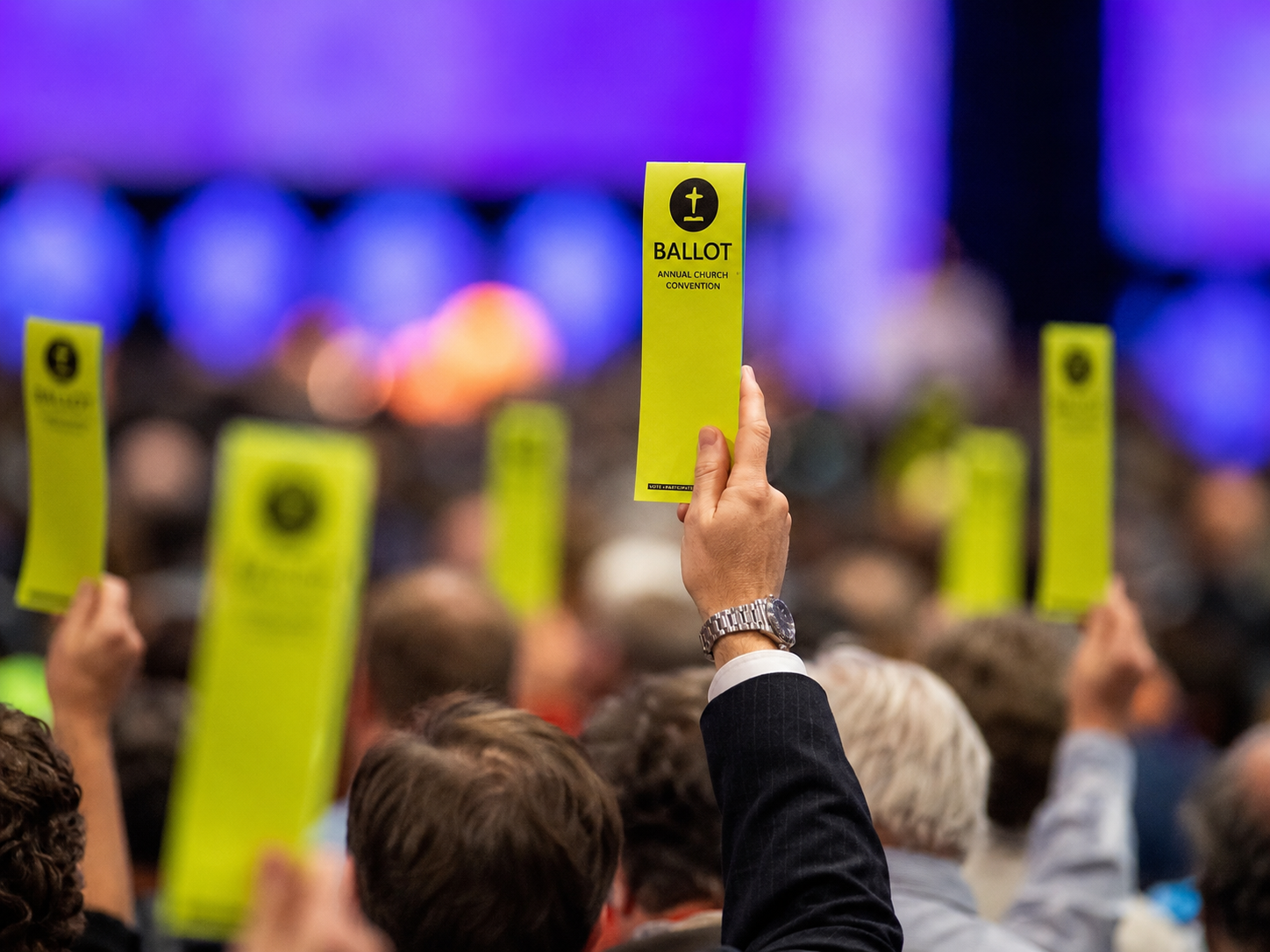
The amendment received strong support from messengers and, because it changes the SBC Constitution, must receive a second two-thirds vote at the 2027 annual meeting before becoming final.[2]
The amendment deserves careful consideration, both for what it seeks to clarify and for the concerns surrounding its language, procedure, and future application.
My first concern is pastoral. We must not communicate to women that they are unnecessary to the work of the Great Commission.
Both men and women are created in the image of God, gifted by the Holy Spirit, and indispensable to the mission of the church. Southern Baptist churches have been strengthened immeasurably by the faithfulness, courage, wisdom, generosity, teaching, service, and missionary sacrifice of godly women.
The Baptist Faith and Message itself makes this point before addressing the pastoral office: “Both men and women are gifted for service in the church.” It then states that the office of pastor, elder, or overseer is limited to men as qualified by Scripture.[3]
That is my conviction as well.
However, our deepest commitment is not to a sociological label such as complementarianism. Our foundational commitment is to the inspiration, truthfulness (without error), sufficiency, and authority of Holy Scripture. Our understanding of the pastoral office must arise from that prior commitment.
The amendment represents a good-faith effort to state clearly what Southern Baptists have already confessed: the office of pastor, elder, or overseer is reserved for biblically qualified men.
The word “specifically” matters.
Mohler’s original proposal used the phrase “such as,” which could have suggested that preaching was only one example within a broader and undefined list of pastoral functions. Before the convention, he changed the language to “specifically” in order to narrow its application.
The phrase “specifically preaching to the assembled congregation” identifies the particular function at issue rather than leaving the word function open to an indefinite range of ministries performed by women.
I believe that clarification was important.
At the same time, I share the concern expressed by several brothers and sisters about the procedural precedent involved in suspending Standing Rule 6. Ordinarily, a proposed constitutional amendment is referred to the Executive Committee for consideration and then reported to the following convention. Suspending the rule allowed messengers to consider the amendment immediately.[4]
Even when we agree with a particular result, healthy procedures protect the convention when future majorities may pursue actions with which we disagree.
I am also concerned that some may attempt to weaponize this amendment against sister churches over questions that go beyond its actual language and intention. Convictional Southern Baptists hold a range of views concerning the precise ministries women may undertake while remaining united in the conviction that the pastoral office is limited to qualified men.
We must be clear without becoming careless, and convictional without becoming suspicious of everyone whose practice is not identical to our own.
Confessional Cooperation and Church Autonomy
Part of the difficulty in these conversations comes from confusion over what the Baptist Faith and Message is intended to do.
The Baptist Faith and Message is a confessional document that guides our cooperation. It establishes the theological boundaries within which our convention’s entities, seminaries, mission boards, and agencies carry out the work entrusted to them.
It does not function as an ecclesiastical law imposed upon every local church.
A Southern Baptist church is autonomous. The convention does not ordain its pastors, appoint its leaders, control its property, determine its ministries, or dictate its weekly practices. The SBC Constitution explicitly states that the convention does not claim authority over any church, association, auxiliary organization, or other Baptist body.[5]
Jesus Christ alone is Lord of His church.
However, autonomy does not mean that cooperation has no boundaries. The convention cannot control a local church, but it must determine which churches remain in friendly cooperation with it.
Churches are free to govern themselves under the lordship of Christ, and the convention is responsible for defining the basis upon which churches voluntarily cooperate.
That distinction is essential:
The convention cannot tell a church what it must do, but the convention must determine the conditions under which churches cooperate.
This is why Baptist life can sometimes appear messy. We have no pope, bishop, or denominational hierarchy with authority over every congregation. Our churches are governed locally under the Word of God and are accountable directly to Jesus Christ.
That freedom requires theological conviction, mutual trust, patient discussion, and humble cooperation. It can feel inefficient, but it continually forces us to confront the most important question:
Is Jesus Christ truly Lord of His church?
Why Our Confession of Christ Matters
One issue that continues to concern me is the need for greater clarity in how we speak about the Trinity and the person of Christ.
Several years ago, I went to a microphone at the Southern Baptist Convention and read the Nicene Creed. I did so because our churches benefit when we speak carefully and clearly about the eternal equality of the Father, Son, and Holy Spirit and about the full deity and humanity of Jesus Christ.
In recent years, some evangelicals have taught what is often called the eternal functional subordination of the Son. In its stronger forms, this teaching describes the Son as eternally existing beneath the authority of the Father, with the Father eternally commanding and the Son eternally submitting.
I believe we need to make both a positive and a negative statement here.
Positively, the Father, Son, and Holy Spirit are the one God, equal in glory, majesty, power, and will. The Son is eternally begotten, not made, and is of one being with the Father.
Negatively, the Son is not a lesser divine person, nor does He exist eternally beneath the Father in a divine chain of command.
The Bible, of course, uses the language of obedience. But the Son’s obedience belongs to the saving work of the Father, Son, and Holy Spirit.
The key word is saving.
The Father wills and sends the Son. The Son willingly assumes our humanity and fulfills His mission in perfect obedience. The Holy Spirit anoints Him according to His humanity, abides with Him throughout His earthly life, and equips Him for His messianic ministry.
This does not divide the Trinity into separate actors pursuing separate purposes. It reveals the one saving purpose and action of the one God.
The Father sends, the Son is sent, and the Spirit rests upon the Son, but all three act inseparably for our salvation.
This also helps us understand what Scripture means when it says that the Son “learned obedience.”
The One who obeys is the eternal Son. He did not cease to be what He eternally is. He remained fully God, equal with the Father. Yet without surrendering His deity, He took to Himself what He had not possessed before: a complete human nature.
He remained what He was, yet became what He was not.
The eternal Son became truly human. In His one person, true deity and true humanity are united without confusion, change, division, or separation. This is what Christians mean by the hypostatic union.
Therefore, when Jesus obeys the Father, we are not witnessing one divine being submitting to a greater divine being. We are seeing the eternal Son, in the humanity He assumed, living a genuinely human life of Spirit-filled trust, dependence, worship, and obedience.
And this is where His mediation occurs.
Our problem was not merely that we needed better instructions or a better example. Our humanity had become disobedient, alienated from God, and unable to repair itself.
The Son therefore took our humanity as His own. He entered our condition without sharing our sin and offered from within our humanity the faithful response we had failed to give.
Where Adam disobeyed, Christ obeyed.
Where we distrusted God, Christ trusted the Father completely.
Where we became unfaithful, Christ remained faithful.
He did not merely demonstrate obedience before us. He accomplished obedience for us, in our humanity and on our behalf.
Because He is fully God, His saving action is God’s own action toward us. Because He is fully human, His obedience is a true human response offered to God for us.
In the one person of Jesus Christ, God comes to humanity, and humanity answers God faithfully.
He acts from God toward us and from humanity toward God.
He became what He was not in order to heal what we are. He took what is ours so that He might give us what is His. He assumed the humanity we had corrupted through disobedience so that, through His faithful obedience, our humanity might be healed and we might be reconciled to the Father.
The Son’s obedience, therefore, does not reveal that He is eternally less than the Father. It reveals the saving humility of the One who is equal with the Father and who became our servant in order to bring us home.
This is not an abstract theological argument.
A lesser Christ cannot carry the weight of the gospel.
If Jesus is not fully God, then God has not truly come to save us. If He is not fully human, then our humanity has not truly been assumed, healed, and reconciled. Our salvation rests upon the identity of the One who saves us.
Some may ask, “Are you suggesting that Southern Baptists do not believe these things?”
I am not suggesting that our convention has formally denied the Trinity or the deity of Christ. I am saying that our confessional language should be clear enough to protect our churches from teachings that weaken either truth.
Recent surveys show that many evangelicals affirm the language of the Trinity while also holding beliefs that contradict it. Southern Baptists should not assume that we are immune from the same confusion.[6]
Others may say that there is no Trinitarian controversy within the Southern Baptist Convention. I hope that is true at the level of our settled convictions. But the absence of a convention-floor controversy does not necessarily mean the absence of doctrinal confusion in our churches.
Who serves as pastor matters because Christ has told us in Scripture how He intends His church to be led.
But before we ask who may stand in the pulpit, we must be absolutely clear about the identity of the One proclaimed from the pulpit.
I believe there is a deeper and more foundational issue before us than the question of women serving as pastors:
Do our churches clearly understand and confess who Jesus Christ is?
That question deserves fuller treatment than I can give it here, and I intend to return to it at another time.
Leaving Orlando Encouraged
I left this year’s convention deeply encouraged.
The Lord used these days to remind me that I am part of something much larger than myself. He also renewed my sense of responsibility to serve a convention that has poured so much into me.
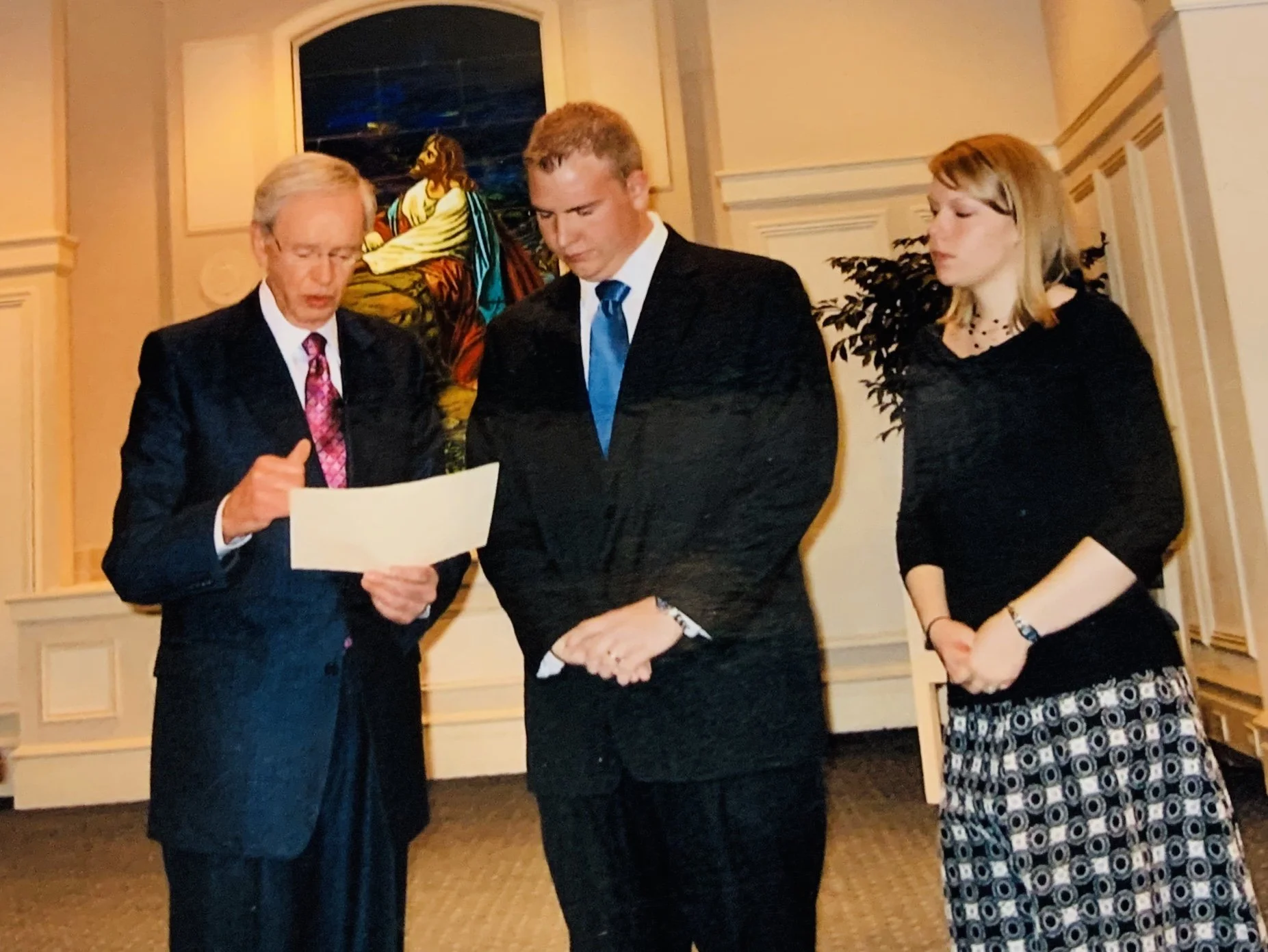
From Clois Watson, a small-country preacher from Carroll County, Georgia, who faithfully served as my pastor at Mills Chapel Baptist Church in Newnan, to the giant who served as my ordaining pastor, Dr. Charles Stanley of First Baptist Church Atlanta; from Truett McConnell College and the Georgia Baptist Convention, to my years at Southeastern Baptist Theological Seminary and among the churches of the Baptist State Convention of North Carolina; and now to my ministry at First Baptist Starkville and among Mississippi Baptists, Southern Baptists have encouraged me, educated me, prayed for me, and helped prepare me for ministry.
I count it one of the great joys of my life to serve among this imperfect family of churches.
We will not always agree. Our business meetings will sometimes be messy. We will occasionally talk past one another, and we will always need to guard against pride, suspicion, political maneuvering, and the temptation to make secondary matters primary.
But our cooperation is worth preserving because our mission is greater than any one church can accomplish alone.
My prayer is that we will keep the Great Commission at the center, the gospel in our mouths, the nations before our eyes, and Jesus Christ above all.
May the Lord use our churches to fulfill the vision of Psalm 67:
“Let the nations be glad and sing for joy.”
And may He hasten the day pictured in Revelation when a multitude from every nation, tribe, people, and language stands before the throne and before the Lamb.
On that day, our debates will be over. Our motions will have ceased. Our institutions will have completed their work.
Together with the redeemed of all the ages, we will give blessing, honor, glory, and power to the only One who is worthy.
Until then, we press on.
We preach Christ.
We encourage one another.
We send missionaries.
And we cooperate so that the nations may know that Jesus Christ is Lord.
Source Notes
[1] Southern Baptists celebrated 63 new International Mission Board missionaries during the June 9 opening session of the annual meeting. Security concerns prevented some missionaries from being photographed or publicly identified.
[2] The Truth and Unity Amendment received 6,028 votes in favor and 2,026 votes against, with 20 ballots disallowed. As a constitutional amendment, it must receive a second two-thirds vote at the 2027 annual meeting before becoming part of the SBC Constitution.
[3] Article VI of the Baptist Faith and Message states that both men and women are gifted for service and limits the office of pastor, elder, or overseer to men qualified by Scripture.
[4] The amendment’s language included “specifically preaching to the assembled congregation.” Messengers also suspended Standing Rule 6, which would ordinarily have referred the proposal to the Executive Committee for a report at the following convention.
[5] The SBC Constitution states that the convention does not exercise authority over local churches or other Baptist bodies.
[6] Lifeway Research’s 2025 State of Theology reporting found substantial doctrinal confusion among people identified as evangelicals, including widespread belief that the Holy Spirit is an impersonal force.